The Annual Petroleum & Chemical Automation Technology & Equipment and Instrumentation Event


- |
- Chinese



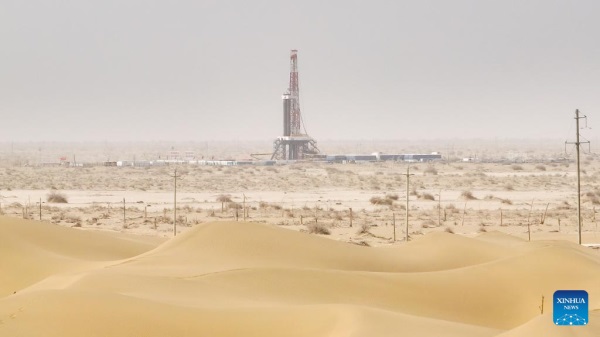
A drone photo taken on March 2, 2024 shows the "Shenditake 1" borehole in the Taklimakan Desert in the Tarim Basin, northwest China's Xinjiang Uygur Autonomous Region. The drilling of a superdeep borehole in northwest China's Xinjiang Uygur Autonomous Region reached 10,000 meters at 2:48 p.m. Monday and is going deeper, marking a breakthrough in the country's deep-Earth exploration.
Located in the hinterland of the Taklimakan Desert in the Tarim Basin, the "Shenditake 1" is expected to reach a designed depth of 11,100 meters upon completion. It is China's first scientific exploration borehole designed to exceed a depth of 10,000 meters. (Xinhua/Li Xiang)
URUMQI, March 4 (Xinhua) -- The drilling of a superdeep borehole in northwest China's Xinjiang Uygur Autonomous Region reached 10,000 meters at 2:48 p.m. Monday and is going deeper, marking a breakthrough in the country's deep-Earth exploration.
Located in the hinterland of the Taklimakan Desert in the Tarim Basin, the "Shenditake 1" is expected to reach a designed depth of 11,100 meters upon completion. It is China's first scientific exploration borehole designed to exceed a depth of 10,000 meters.
Since the start of drilling on May 30, 2023, the borehole has penetrated 13 continental strata, with more than 1,000 drill pipes driven into the Earth and over 20 drill bits consumed in the process.
"It is the first time that China has drilled a vertical borehole over 10,000 meters deep," said Wang Chunsheng, chief expert of the Tarim Oilfield of China National Petroleum Corporation, which is in charge of the drilling.
Located between the Tianshan and the Kunlun mountains, the Tarim Basin is one of the most difficult areas to explore due to its harsh ground environment and complicated underground conditions.
Wang said that after reaching 10,000 meters, the drilling will face more severe challenges such as temperatures of over 200 degrees Celsius and formation pressure exceeding 130 MPa, and the difficulty will multiply with each meter drilled deeper.
The deepest vertical well in the world today has a depth of more than 12,262 meters. Jia Chengzao, an academician at the Chinese Academy of Sciences, said the "Shenditake 1" has become the second deepest vertical well worldwide and the deepest in Asia, and is of milestone significance in deep-Earth scientific research and ultra-deep oil and gas exploration.
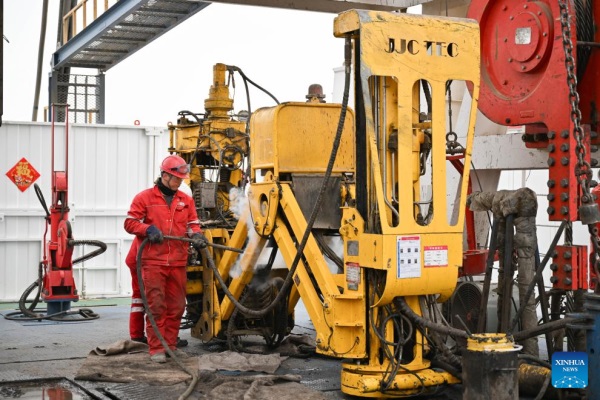
Staff members work at "Shenditake 1" borehole in the Taklimakan Desert in the Tarim Basin, northwest China's Xinjiang Uygur Autonomous Region, March 3, 2024. The drilling of a superdeep borehole in northwest China's Xinjiang Uygur Autonomous Region reached 10,000 meters at 2:48 p.m. Monday and is going deeper, marking a breakthrough in the country's deep-Earth exploration.
Located in the hinterland of the Taklimakan Desert in the Tarim Basin, the "Shenditake 1" is expected to reach a designed depth of 11,100 meters upon completion. It is China's first scientific exploration borehole designed to exceed a depth of 10,000 meters. (Xinhua/Li Xiang)
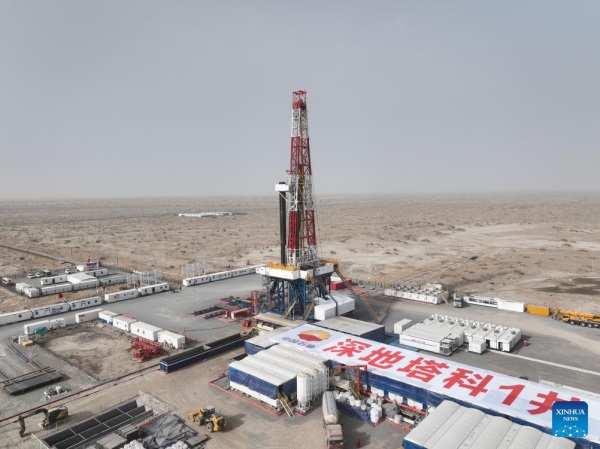
A drone photo taken on March 4, 2024 shows the "Shenditake 1" borehole in the Taklimakan Desert in the Tarim Basin, northwest China's Xinjiang Uygur Autonomous Region. The drilling of a superdeep borehole in northwest China's Xinjiang Uygur Autonomous Region reached 10,000 meters at 2:48 p.m. Monday and is going deeper, marking a breakthrough in the country's deep-Earth exploration.
Located in the hinterland of the Taklimakan Desert in the Tarim Basin, the "Shenditake 1" is expected to reach a designed depth of 11,100 meters upon completion. It is China's first scientific exploration borehole designed to exceed a depth of 10,000 meters. (Xinhua/Li Xiang)
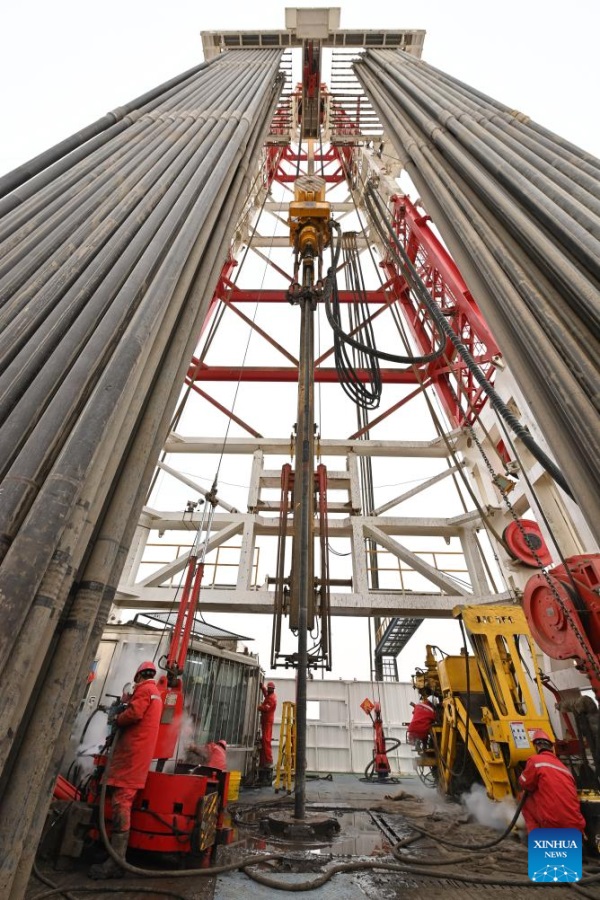
Staff members work at "Shenditake 1" borehole in the Taklimakan Desert in the Tarim Basin, northwest China's Xinjiang Uygur Autonomous Region, March 3, 2024. The drilling of a superdeep borehole in northwest China's Xinjiang Uygur Autonomous Region reached 10,000 meters at 2:48 p.m. Monday and is going deeper, marking a breakthrough in the country's deep-Earth exploration.
Located in the hinterland of the Taklimakan Desert in the Tarim Basin, the "Shenditake 1" is expected to reach a designed depth of 11,100 meters upon completion. It is China's first scientific exploration borehole designed to exceed a depth of 10,000 meters. (Xinhua/Li Xiang)
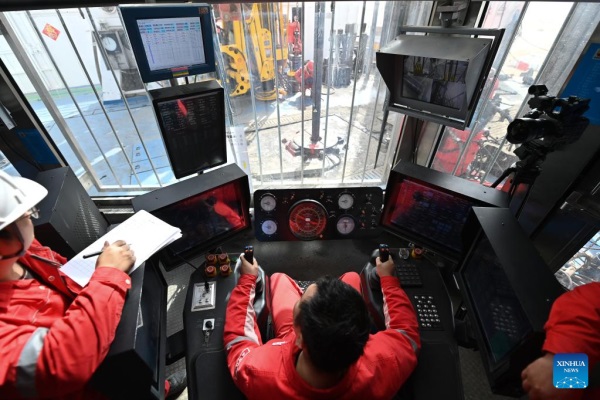
Staff members work at "Shenditake 1" borehole in the Taklimakan Desert in the Tarim Basin, northwest China's Xinjiang Uygur Autonomous Region, March 4, 2024. The drilling of a superdeep borehole in northwest China's Xinjiang Uygur Autonomous Region reached 10,000 meters at 2:48 p.m. Monday and is going deeper, marking a breakthrough in the country's deep-Earth exploration.
Located in the hinterland of the Taklimakan Desert in the Tarim Basin, the "Shenditake 1" is expected to reach a designed depth of 11,100 meters upon completion. It is China's first scientific exploration borehole designed to exceed a depth of 10,000 meters. (Xinhua/Li Xiang)
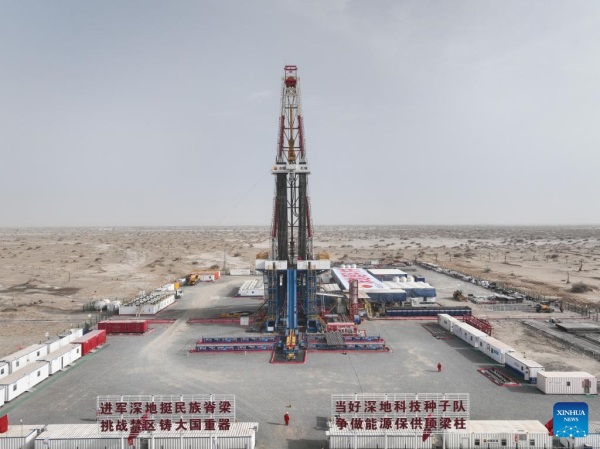
A drone photo taken on March 4, 2024 shows the "Shenditake 1" borehole in the Taklimakan Desert in the Tarim Basin, northwest China's Xinjiang Uygur Autonomous Region. The drilling of a superdeep borehole in northwest China's Xinjiang Uygur Autonomous Region reached 10,000 meters at 2:48 p.m. Monday and is going deeper, marking a breakthrough in the country's deep-Earth exploration.
Located in the hinterland of the Taklimakan Desert in the Tarim Basin, the "Shenditake 1" is expected to reach a designed depth of 11,100 meters upon completion. It is China's first scientific exploration borehole designed to exceed a depth of 10,000 meters. (Xinhua/Li Xiang)
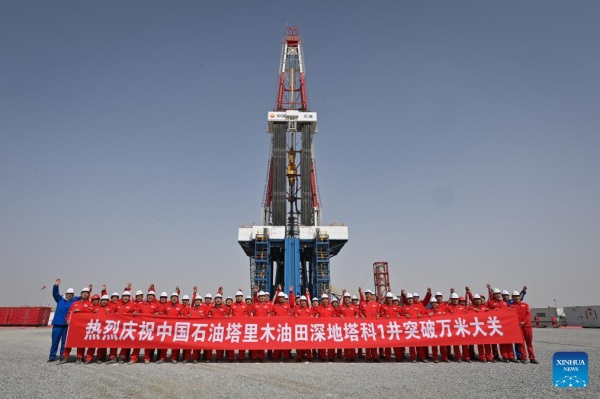
Staff members celebrate as the drilling of the "Shenditake 1" borehole reaches 10,000 meters in the Taklimakan Desert in the Tarim Basin, northwest China's Xinjiang Uygur Autonomous Region, March 4, 2024. The drilling of a superdeep borehole in northwest China's Xinjiang Uygur Autonomous Region reached 10,000 meters at 2:48 p.m. Monday and is going deeper, marking a breakthrough in the country's deep-Earth exploration.
Located in the hinterland of the Taklimakan Desert in the Tarim Basin, the "Shenditake 1" is expected to reach a designed depth of 11,100 meters upon completion. It is China's first scientific exploration borehole designed to exceed a depth of 10,000 meters. (Xinhua/Li Xiang)
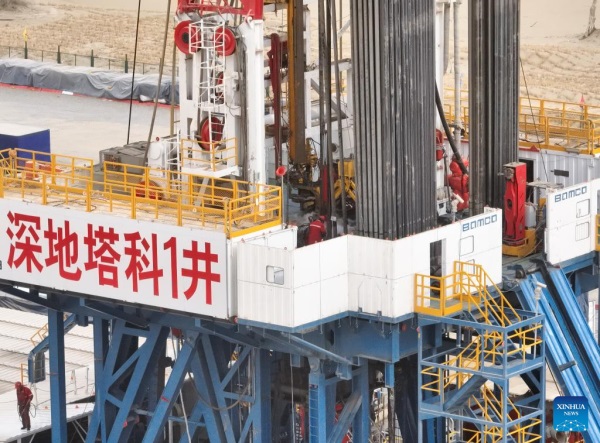
A drone photo taken on March 3, 2024 shows staff members working at "Shenditake 1" borehole in the Taklimakan Desert in the Tarim Basin, northwest China's Xinjiang Uygur Autonomous Region. The drilling of a superdeep borehole in northwest China's Xinjiang Uygur Autonomous Region reached 10,000 meters at 2:48 p.m. Monday and is going deeper, marking a breakthrough in the country's deep-Earth exploration.
Located in the hinterland of the Taklimakan Desert in the Tarim Basin, the "Shenditake 1" is expected to reach a designed depth of 11,100 meters upon completion. It is China's first scientific exploration borehole designed to exceed a depth of 10,000 meters. (Xinhua/Li Xiang)
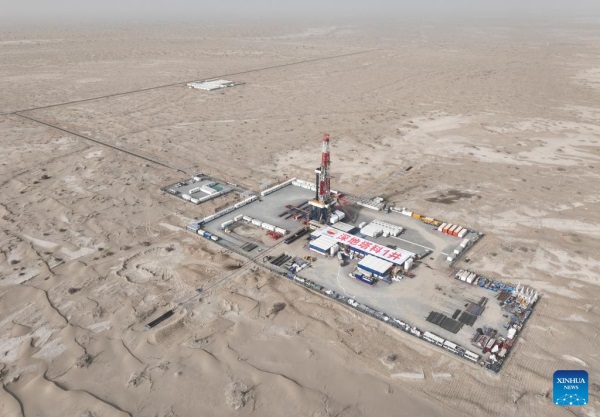
An aerial drone photo taken on March 4, 2024 shows the "Shenditake 1" borehole in the Taklimakan Desert in the Tarim Basin, northwest China's Xinjiang Uygur Autonomous Region. The drilling of a superdeep borehole in northwest China's Xinjiang Uygur Autonomous Region reached 10,000 meters at 2:48 p.m. Monday and is going deeper, marking a breakthrough in the country's deep-Earth exploration.
Located in the hinterland of the Taklimakan Desert in the Tarim Basin, the "Shenditake 1" is expected to reach a designed depth of 11,100 meters upon completion. It is China's first scientific exploration borehole designed to exceed a depth of 10,000 meters. (Xinhua/Li Xiang)
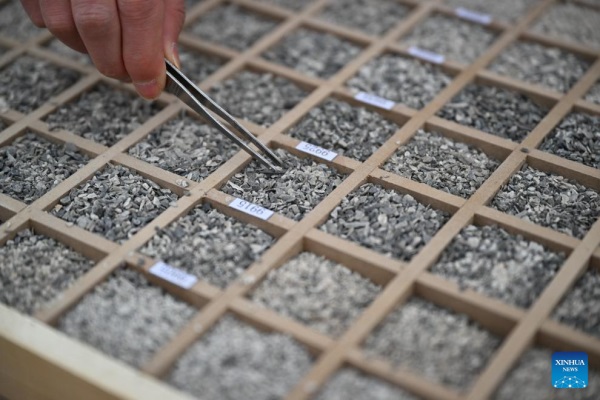
A researcher looks at samples collected from deep earth through a microscope at "Shenditake 1" borehole in the Taklimakan Desert in the Tarim Basin, northwest China's Xinjiang Uygur Autonomous Region, March 3, 2024. The drilling of a superdeep borehole in northwest China's Xinjiang Uygur Autonomous Region reached 10,000 meters at 2:48 p.m. Monday and is going deeper, marking a breakthrough in the country's deep-Earth exploration.
Located in the hinterland of the Taklimakan Desert in the Tarim Basin, the "Shenditake 1" is expected to reach a designed depth of 11,100 meters upon completion. It is China's first scientific exploration borehole designed to exceed a depth of 10,000 meters. (Xinhua/Li Xiang)
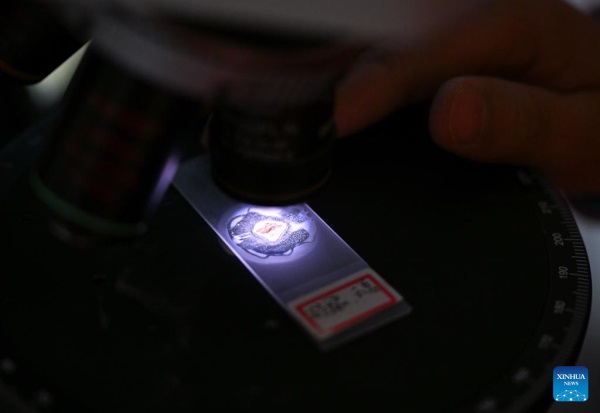
A researcher looks at samples collected from deep earth through a microscope at "Shenditake 1" borehole in the Taklimakan Desert in the Tarim Basin, northwest China's Xinjiang Uygur Autonomous Region, March 3, 2024. The drilling of a superdeep borehole in northwest China's Xinjiang Uygur Autonomous Region reached 10,000 meters at 2:48 p.m. Monday and is going deeper, marking a breakthrough in the country's deep-Earth exploration
Located in the hinterland of the Taklimakan Desert in the Tarim Basin, the "Shenditake 1" is expected to reach a designed depth of 11,100 meters upon completion. It is China's first scientific exploration borehole designed to exceed a depth of 10,000 meters. (Xinhua/Li Xiang)
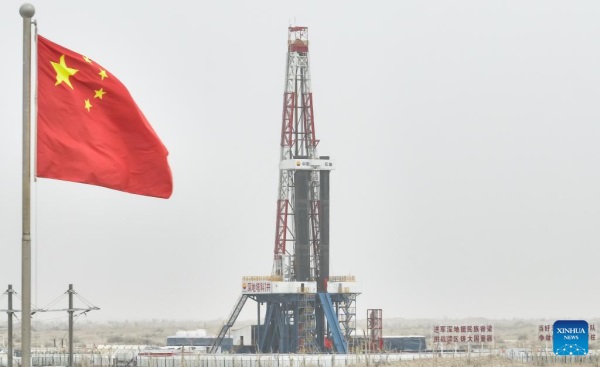
A drone photo taken on March 3, 2024 shows the "Shenditake 1" borehole in the Taklimakan Desert in the Tarim Basin, northwest China's Xinjiang Uygur Autonomous Region. The drilling of a superdeep borehole in northwest China's Xinjiang Uygur Autonomous Region reached 10,000 meters at 2:48 p.m. Monday and is going deeper, marking a breakthrough in the country's deep-Earth exploration.
Located in the hinterland of the Taklimakan Desert in the Tarim Basin, the "Shenditake 1" is expected to reach a designed depth of 11,100 meters upon completion. It is China's first scientific exploration borehole designed to exceed a depth of 10,000 meters. (Xinhua/Li Xiang)
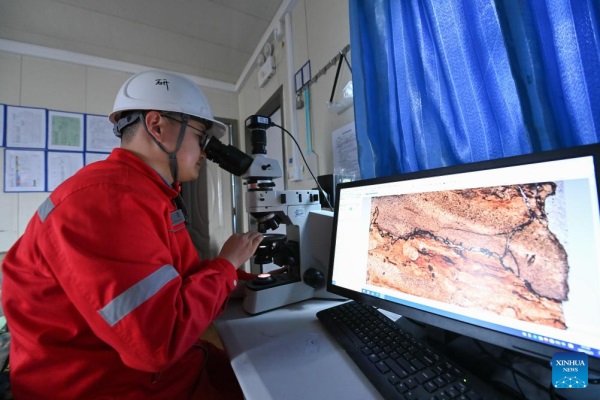
A researcher looks at samples collected from deep earth through a microscope at "Shenditake 1" borehole in the Taklimakan Desert in the Tarim Basin, northwest China's Xinjiang Uygur Autonomous Region, March 3, 2024. The drilling of a superdeep borehole in northwest China's Xinjiang Uygur Autonomous Region reached 10,000 meters at 2:48 p.m. Monday and is going deeper, marking a breakthrough in the country's deep-Earth exploration.
Located in the hinterland of the Taklimakan Desert in the Tarim Basin, the "Shenditake 1" is expected to reach a designed depth of 11,100 meters upon completion. It is China's first scientific exploration borehole designed to exceed a depth of 10,000 meters. (Xinhua/Li Xiang)


Nowadays, Internet has became the core of the new round of technology industrial revolution, Artificial intelligence will affect daily life of human being. Read More >


 Exhibitor Login